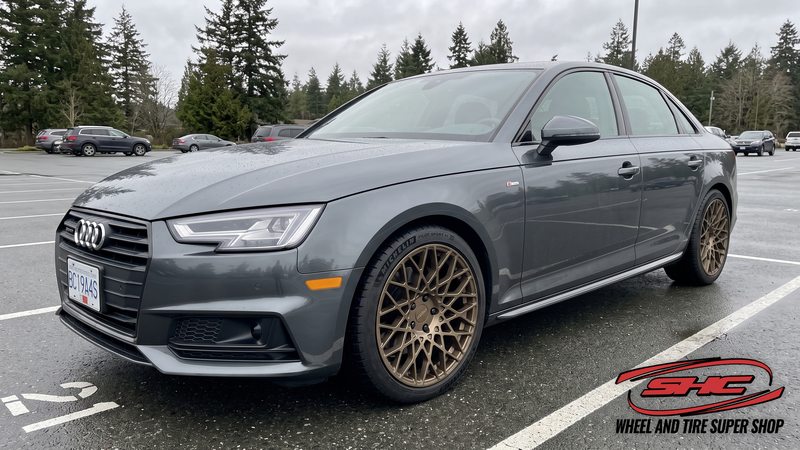
A ceramic coating is not a five-year holiday from washing your car. It is a five-year head start, and the difference between a coating that still beads in year four and one that stopped working by March is entirely down to what happens between October and April.
Here is what a Victoria winter does to a coated car, and the routine that deals with it.
What is actually landing on the paint here
Our winter grime is different from the prairies. It is not primarily salt crust - it is a persistent grey road film: fine grit from highway sanding, brake dust, diesel soot, oil and organic matter, all suspended in water that never fully evaporates because the air is at eighty percent humidity for months.
That film is the problem. A coating is chemically inert, so nothing in road film attacks it directly. But left to sit for weeks, the film bonds mechanically to the coating's surface, and once it does, the water can no longer reach the coating to bead off it. The coating is still there. It just cannot do its job through a layer of grime.
People read that as "the coating failed after one winter." It did not. It got buried.
The routine
Wash every two weeks, minimum
Through winter, every two weeks. It sounds like a lot until you realise a coated car washes in about half the time - most of the grime rinses rather than needing to be scrubbed. Fifteen minutes every second Saturday keeps a coating behaving like a coating.
If a stretch goes badly and the car sits for six weeks, do not panic - a proper decontamination wash will usually bring it back.
Rinse first, properly
Winter grit is angular and it will scratch. Never put a mitt onto a dirty coated panel. Rinse the whole car thoroughly first and let the water do the work of floating grit off before anything touches the paint. Wheel arches and rockers hold the most, so start there.
Two buckets, pH-neutral soap
One bucket of soap, one of clean rinse water, grit guards in both. Rinse the mitt in the clean bucket between panels. Use a pH-neutral car soap - the strong alkaline degreasers sold as "cleans everything" will strip the sacrificial layer off a coating over time.
Top down, one panel at a time, and change the water when it goes grey.
Dry, do not let it air dry
Victoria water is not especially hard, but road film residue in the rinse water will leave spots. Blot with a clean drying towel or blow the water off. A coated car sheds most of the water on its own, so drying is quick.
What kills a coating early
- Automatic brush washes. The single worst thing you can do. Those brushes carry the grit from every car ahead of you and will put swirls into a coated car exactly as they would into an uncoated one. The coating is harder than clear coat, not armour-plated.
- Touchless washes, repeatedly. Better than brushes, but touchless washes work by using very strong alkaline and acidic chemistry to lift dirt without contact. Occasionally is fine. Every week all winter will wear a coating's performance down noticeably.
- Acidic wheel cleaners. Fast on baked brake dust, and they will take the top off a wheel coating. pH-neutral only.
- Letting road film sit. Covered above, and it is the most common cause by a distance.
- Polishing. Worth saying because it surprises people: machine polishing removes the coating. It is an abrasive process and the coating is a few microns thick. If a coated car needs correction, the coating comes off and goes back on.
Twice a year: decontaminate
Even with good washing, two things build up that soap will not remove. Iron fallout - microscopic brake and rail dust particles that embed and then rust - and tar and organic bonding from road spray and tree sap.
A dedicated iron remover and a tar solvent, used once in late autumn and once in spring, take care of both. These are chemical, not abrasive, so they are coating-safe. Late October and April are the right times here - going into winter clean, and coming out of it clean.
Toppers: worth it, with a caveat
A silica-based spray topper applied after a wash restores the surface hydrophobicity and adds a sacrificial layer over the coating. Every two to three months through winter is sensible, and it takes about ten minutes.
The caveat: a topper is not a substitute for washing, and reapplying one over road film just seals the film in. Clean first, then top.
The things people forget
- Glass. Windshield coating lasts one to two years rather than five, and it is the surface doing the most work in a Victoria winter. Ours starts at $75 and it is the cheapest meaningful upgrade to driving here in the rain. Refresh it when water stops clearing itself at speed.
- Wheels. Wheel coating also runs one to two years. Brake dust holds moisture and chloride against the wheel face, which is where coastal wheel corrosion actually begins - our wheel and caliper coating starts at $300 for four.
- Door jambs and the underside of the trunk lid. Not usually coated, and they collect the most salt film. Wipe them when you wash.
- Spring pollen. Late March and April here means fir pollen everywhere, and it is mildly acidic. A coated car sheds it easily but only if you rinse it off rather than leaving it to bake in the first warm week.
When to bring it in
Two signs a coating wants professional attention rather than another home wash: water stops beading even on a freshly washed panel, or the paint feels rough to a fingertip through a plastic bag after washing. The first usually means the surface needs decontaminating; the second means embedded fallout.
Both are fixable without recoating in most cases. A maintenance service - decontamination wash, iron and tar removal, and a fresh topper - restores the behaviour you paid for and costs a fraction of a new coating. Once a year, ideally in spring, is enough for most cars here.
About SHC Auto
We have been maintaining finishes through Victoria winters since 1991, which is long enough to know that most "failed" coatings are neglected ones rather than bad ones. SHC Autographx and Tires is at 474 Bay Street - ceramic coating and detailing, paint protection film, vinyl wrap and window tint, plus tires, aftermarket wheels, suspension and parts.
We are an independent shop, not a chain. If your coating is genuinely at the end of its life we will say so; if it just needs a proper decontamination, we will say that instead.
SHC Autographx and Tires
474 Bay Street, Victoria, BC
Monday to Friday, 9:00 am to 5:30 pm
Book the autumn service
The best single thing you can do for a coated car here is a decontamination and topper in late October, before the first six weeks of road film. It takes the winter from a problem to a non-event, and it is the difference between a coating that still works in April and one you are wondering about.
If you are not sure what condition yours is in, bring it by. Two minutes with a hose tells us more than a description over the phone.