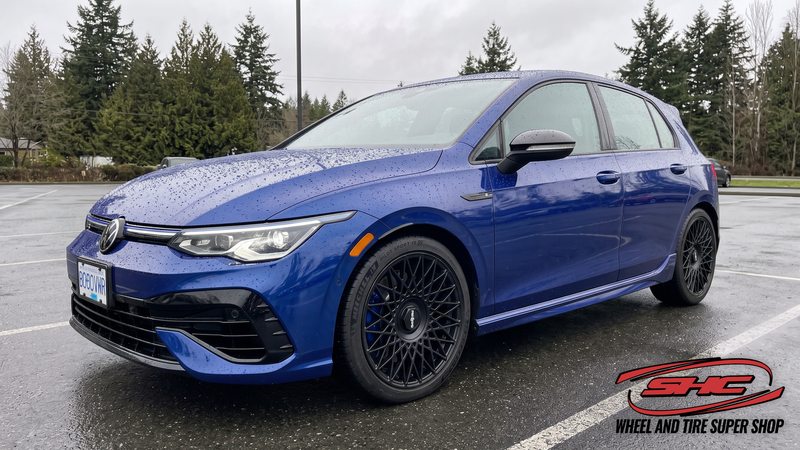
Ceramic coating is the most oversold product in this industry, which is a shame, because in a climate like ours it is also one of the most genuinely useful. The problem is that it gets marketed on the wrong thing - gloss and beading photos - when the actual argument here is chemical resistance and the fact that a coated car gets clean in half the time.
So: honest durability, honest limits, and where the money actually goes.
How long each one really lasts
- Carnauba wax: four to eight weeks on a car that lives outside here. Beautiful warm gloss, and it is gone by the time you notice it is gone. In a wet winter, closer to four.
- Synthetic sealant: three to six months. Better chemical resistance than wax, less character in the shine. A reasonable choice if you enjoy doing it yourself twice a year.
- Ceramic coating: years, not months. A single-layer coating runs about five years; a two-layer system with a dedicated top coat runs about ten. Both need maintenance to stay at their best - see below - but neither is something you reapply seasonally.
Our coating packages are $1,295 for the five-year (a base coat of Autotriz 3D Matrix Ultra) and $1,695 for the ten-year (Autotriz 3D Matrix Pro under a Top Coat V2.0). Both cover every painted panel plus the trim, the wheels and the glass, not just the hood and doors.
What a coating actually does
Silica-based coatings cross-link into a hard, chemically inert layer a few microns thick that is bonded to the clear coat rather than sitting on it like wax. Practically, on this coast that buys you:
- Chemical resistance. Bird lime, tree sap, sap-drip from the cedars everyone parks under - these etch clear coat when they sit. A coating gives you a buffer and a much better chance of removing them without polishing.
- Hydrophobicity that does real work. Water sheets off instead of sitting, which means less road film sticking, fewer water spots from hard water, and a car that mostly rinses clean.
- Time. This is the underrated one. Washing a coated car takes about half as long, because most of the grime never bonded in the first place.
- UV and oxidation resistance, which matters more for the trim than the paint on a modern car.
What a coating does not do
This is the part that gets left out, so here it is plainly.
- It does not stop rock chips. A coating is microns thick. Stones are not stopped by microns. If chips are your concern, that is paint protection film, which is a completely different product.
- It does not prevent scratches from bad washing. It is harder than clear coat, which helps at the margins, but a dirty wash mitt or an automatic brush wash will still put swirls into a coated car.
- It does not fix what is already there. A coating is optically clear and it seals in whatever is underneath. Swirls, etching and dull paint stay, now under a hard layer.
- It does not mean you stop washing. It means washing is easier and less risky, not optional. A coating left under road film for a whole winter will stop behaving like a coating.
Why the prep is most of the invoice
Here is the thing most quotes do not spell out: on a used car, the majority of the labour in a coating job is not the coating. It is the decontamination and paint correction underneath.
Because the coating locks in the finish for years, the finish has to be right first. That means a proper wash, chemical decontamination for iron fallout and tar, a clay treatment, and then machine polishing to remove swirls and etching. On a neglected car that can be a multi-day job on its own, and it is why two coating quotes on two different cars can look nothing alike.
On a new car it is much simpler. Our packages include a single-pass correction on new vehicles; on used ones we will look at the paint and tell you honestly whether more is warranted. Some cars want it. Some cars are fine.
If someone quotes you a coating on a five-year-old daily driver with no correction line item, that is not a bargain. That is a coating going straight over the swirls.
The $75 item that matters most here
If you only do one coated surface on a Victoria car, make it the windshield.
Glass coating starts at $75 and lasts one to two years. Treated glass sheds water at speeds as low as 60 km/h - which means on the Pat Bay in November the water clears itself and the wipers become a backup rather than the main event. It also noticeably cuts oncoming headlight glare through rain at night, which is the single worst driving condition we get all year.
For the money, nothing else in detailing changes your winter driving experience as much.
And the one for wheels
Wheel and caliper coating starts at $300 for four wheels and lasts one to two years. It is heat resistant and it stops brake dust bonding to the finish, which on this coast matters more than it sounds - brake dust holds moisture and chloride against the wheel face, and that is how coastal wheel corrosion starts.
Both coating packages above already include the wheels. The standalone package is for cars that are not getting a full coating, or for a new set of wheels going on.
So which should you buy?
- Wax: if you enjoy detailing your own car on a Saturday and you like the look. It is a hobby, not a protection strategy.
- Sealant: if you want meaningful protection, you are willing to reapply twice a year, and you are not ready to spend on a coating.
- Five-year coating, $1,295: the sensible default for a daily driver you plan to keep three to five years. Best value per year in the range.
- Ten-year coating, $1,695: worth the extra if you are keeping the car long term, or if it is a dark colour where every defect shows and you want the hardest surface available.
- Glass at $75: everyone. Regardless of what else you do.
And if rock chips are what actually bother you, spend the money on paint protection film instead and coat over the top of it. Film and coating do different jobs, and a coating over film is easier to clean than bare film.
About SHC Auto
We have been in the business of protecting finishes in Victoria since 1991, which is long enough to have seen what actually survives a wet coastal winter and what only survives the photo shoot. SHC Autographx and Tires is at 474 Bay Street - ceramic coating and detailing, paint protection film, vinyl wrap and window tint, plus tires, aftermarket wheels, suspension and parts.
We are an independent shop, not a chain, which means we will tell you when your paint wants correction before a coating, and equally when it does not.
SHC Autographx and Tires
474 Bay Street, Victoria, BC
Monday to Friday, 9:00 am to 5:30 pm
Have a look at the paint first
The right answer depends almost entirely on the condition of the paint you already have, and that is a five-minute look under proper light rather than a phone conversation. Bring the car by and we will tell you what it needs, what it does not, and what the number would actually be.
If you are taking delivery of a new car this fall, that is the easiest and cheapest version of this job - book it before the first winter rather than after.