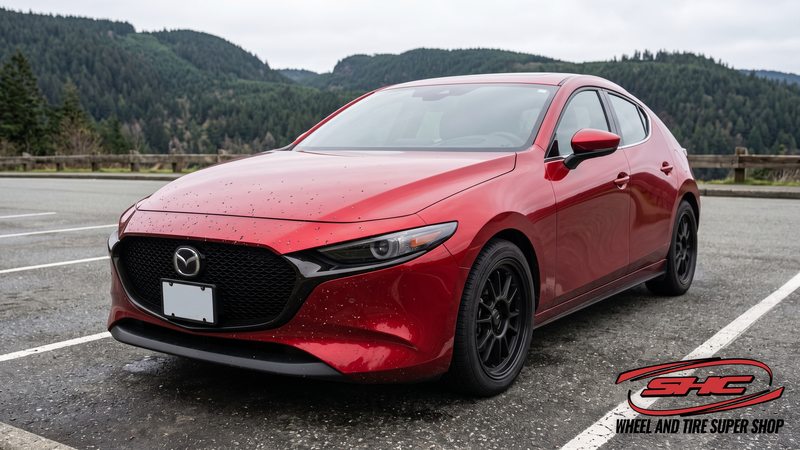
People who move here from the prairies notice it within a year. Their car did fine through Alberta winters, and eighteen months of commuting over the Malahat has left the front bumper looking like it has been sandblasted. It has, more or less.
The reason is not that Island roads are worse. It is that our winters are mild, and mild winters get treated differently.
Mild weather means sand, not salt
Highway maintenance on Vancouver Island uses three things: anti-icing brine sprayed before a storm, road salt, and graded winter sand. Which one gets used depends on pavement temperature. Salt loses effectiveness below about -5 C, and abrasives are the standard traction treatment when the pavement is above roughly -9 C.
On the Malahat, pavement temperature is above -9 C for essentially the entire winter. So what goes down, over and over, is sand. Graded, angular, ministry-specified sand, spread across a highway that climbs to about 350 metres and then gets driven at 80 km/h by everything from commuter hatchbacks to loaded logging trucks.
That is the mechanism. A car behind a truck at highway speed on a sanded road is driving through a low-grade shot-peening operation. Cold, brittle paint takes it worse than warm paint does, which is why the damage concentrates in the same months the sand does.
And then there is everything else
- Chip-seal secondary routes. Much of the Island's secondary network is surface-treated with chip seal - a sprayed binder with aggregate rolled into it. It is durable and cheap, and for the first season it sheds loose stone. Anyone who takes back roads out to Sooke, Shawnigan or up-Island is driving on it.
- Logging and gravel traffic. Working trucks track aggregate onto paved roads all year here in a way they simply do not in a city.
- Wet roads throw further. A wet tire picks up and flings grit that a dry tire would roll over. We have wet roads most of the winter.
- Two-lane geometry. On a divided highway you can move out of the wheel tracks behind a truck. On the Malahat, often you cannot.
Where the damage actually lands
Chip damage is not random. It arrives in a predictable pattern, which is exactly why film coverage is sold the way it is:
- Lower front bumper - the heaviest concentration, and the first thing anyone notices.
- Leading edge of the hood - a band roughly the first 30 cm back, where debris arcs up over the bumper.
- Headlights - modern polycarbonate lenses pit and haze, and hazing scatters light at night.
- Mirror faces and A-pillars - anything standing proud in the airflow.
- Rocker panels and behind the front wheels - thrown by your own front tires, not oncoming traffic.
Why it is more than cosmetic here
A chip that stops in the clear coat is cosmetic. A chip that goes through to primer or bare metal is an opening, and on this coast that matters more than it does inland. Salt aerosol is in the air year round and the paint edge around a chip rarely dries out completely. What starts as a white speck becomes a lifting edge, and then a rust spot that needs body work rather than touch-up.
Headlights are the expensive one people do not see coming. A hazed, pitted lens on a modern car is often not a $40 restoration kit - the assemblies are sealed LED or projector units, and replacement can run well into four figures per side. That is the whole argument for putting film on them while they are still clear.
What actually helps
Following distance. Free, and it is the single biggest variable. Most chips come from the vehicle in front, not from oncoming traffic. Doubling your gap behind a gravel truck does more than any product.
Paint protection film. This is the only thing that genuinely stops a stone. PPF is a thick urethane film - considerably thicker than a vinyl wrap - that absorbs the impact instead of your paint. Minor marks in it self-heal with heat. It comes off years later without taking the paint with it, which is the point: the factory finish underneath is still the factory finish, and that matters at resale.
Our PPF starts at $1,795, and that starting price covers the front clip - bumper, hood, fenders and mirrors - which is precisely the pattern described above. It is available in clear or matte, so a satin-finish car does not end up with a glossy nose.
Headlight and taillight film starts at $199 for two lights. Against the cost of replacing one pitted headlight assembly, that is the easiest maths in this article. It also comes in smoke and tinted finishes if you want the look as well as the protection.
What does not stop chips: ceramic coating. A coating is a few microns thick and it is brilliant at chemical resistance, brake dust, water beading and making the car easier to wash. It is not armour and no honest shop will tell you otherwise. Coating and film do different jobs, and plenty of cars here get both - film on the strike zone, coating over everything.
The case for doing it on a commuter, not just a show car
Film gets marketed with photos of supercars, which makes people assume it is for garage queens. Backwards. A car that lives in a garage and does 4,000 km a year barely needs it. A Corolla that crosses the Malahat twice a day, five days a week, is the car that will be visibly chipped in two years and worth less for it.
If you drive that commute, the front clip is not a luxury purchase. It is the cheapest way to still have factory paint on the front of the car when you sell it.
About SHC Auto
We have been protecting OEM paint in Victoria since 1991, and we hand-trim rather than relying on machine templates, which is what keeps film edges tight instead of leaving a visible gap at the panel line. SHC Autographx and Tires is at 474 Bay Street, and paint protection is one part of what we do - we also handle tires, aftermarket wheels, suspension and parts, vinyl wrap, window tint and ceramic coating.
We are an independent shop, not a chain, which means we will tell you when partial coverage is enough for how you actually drive rather than quoting you a full car by reflex.
SHC Autographx and Tires
474 Bay Street, Victoria, BC
Monday to Friday, 9:00 am to 5:30 pm
Already chipped?
Film goes over the paint as it is, so it locks in whatever is already there - which is an argument for doing it sooner rather than after another winter. If your car already has damage, bring it in and we will tell you honestly whether it wants touch-up first, whether a paint correction is worth doing underneath, or whether it is fine to film as-is.
And if you are buying a new car this fall, the best time to film it is before it has been driven over the hill even once.