Paint protection film gets quoted in packages, and the package names are not standardised. One shop's "front end" is another shop's "partial front." Since the difference between them can be a thousand dollars, it is worth knowing exactly what panels you are being quoted on before you compare two numbers.
First, what the film actually is
PPF is a thermoplastic urethane film applied over your paint. It is far thicker than a vinyl wrap - thick enough that a stone which would chip paint gets absorbed by the film instead. The top layer self-heals: light swirls and fine scratches close up with heat, either from the sun or a bucket of warm water.
Two things follow from that. It is genuinely protective rather than cosmetic, and it comes off years later without taking your factory paint with it. That second part is the resale argument - the car underneath still wears original paint.
It is also not a coating. Ceramic coating is a few microns thick and does chemical resistance, gloss and easy cleaning. Film does impact. They are different products for different problems, and plenty of cars end up with both.
The coverage levels
Partial front
The bumper, the leading portion of the hood - typically the first 45 to 60 cm - the mirrors, and often the headlights. This is the cheapest way to cover the highest-impact area, and for a lot of drivers it is genuinely enough.
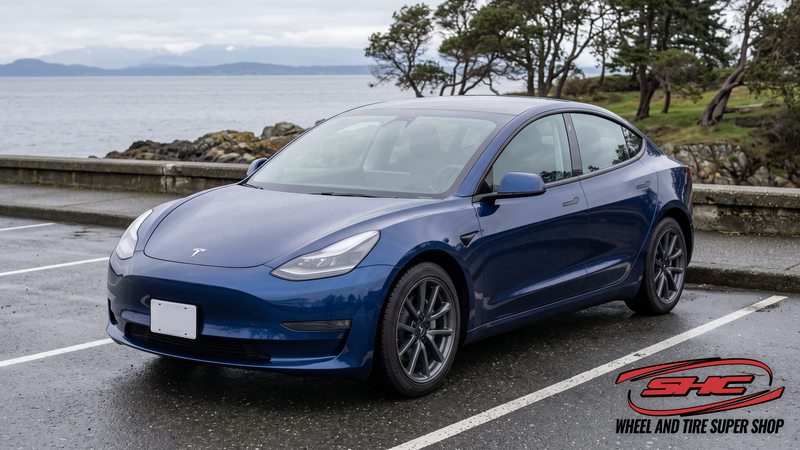
The catch is the line across the hood, and it is the single thing that decides whether a partial job reads as deliberate or as cheap. On a car with a body crease or a character line running across the hood at roughly the right place, the film can be terminated into it and effectively disappears. On a car with a smooth, unbroken hood, there is no natural place to stop, and the line will be visible in the right light forever. That is not an installation flaw - it is physics - and any shop that does not raise it before quoting you is not doing you a favour.
Full front
Full bumper, full hood, full fenders, mirrors, and usually headlights. No line across the hood, because the film terminates at panel edges instead.
This is the tier that covers the pattern that damage actually follows on this island - lower bumper, leading hood edge, headlights, mirror faces. Our PPF starts at $1,795, and that starting price is exactly this: bumper, hood, fenders and mirrors. Where a quote moves from there is covered below.
Extended or track package
Full front plus the surfaces your own tires throw grit at and the ones exposed at speed: rocker panels, the area behind the front wheels, A-pillars and the leading edge of the roof, and sometimes the rear wheel arches.
Worth it if you drive gravel or logging roads regularly, tow, or track the car. Overkill for a city commuter.
Full car
Every painted panel. It is the only option that leaves zero unprotected paint, and it costs accordingly. The honest case for it is narrow: a car with a soft or expensive paint finish, a vehicle you intend to keep in showroom condition for resale, or a matte or satin factory finish that cannot be polished if it gets marked.
What moves a quote
Two cars with the same coverage level can be priced quite differently, and the reasons are worth knowing so a quote does not look arbitrary:
- Panel size and complexity. A large flat hood is easy. A bumper with deep intakes, sharp creases and multiple sensor cut-outs is not, and the film has to be stretched and relieved to sit properly on it.
- Sensors and cameras. Modern bumpers are full of parking sensors, radar and camera housings. Each one is a cut-out that has to be handled cleanly.
- Wrapped edges versus cut edges. A cut edge leaves the film terminating a couple of millimetres inside the panel edge - visible if you look for it, invisible from two metres. A wrapped edge tucks the film around behind the panel, which looks seamless and protects the edge itself, but means removing lights, mirrors or trim to get behind them. It costs more because it takes longer.
- Existing damage. Film goes over the paint as it is and locks it in. If there are chips, scratches or swirls you want gone, the correction happens first, and that is separate labour.
- Existing paintwork. Film on original factory paint is straightforward. Film over a resprayed panel is a conversation - fresh paint needs to cure fully first, and older repaints do not always release film cleanly on removal.
Clear or matte
Film comes in clear and matte. Clear over gloss paint is invisible when it is installed well. Matte film over gloss paint turns the car satin - that is a styling choice some people want and others discover by accident, so be clear which you are buying.
If your car came from the factory in a matte or satin finish, matte film is the only correct answer. Gloss film over satin paint would look wrong, and satin factory paint cannot be machine-polished if it gets marked, which is exactly why filming it is worth doing.
The add-on almost everyone should take
Headlight and taillight film starts at $199 for two lights. Modern headlight lenses are polycarbonate; they pit, then haze, and hazing scatters light at night. Replacing a sealed LED or projector assembly on a current car can run into four figures per side. Two hundred dollars of film against that is the easiest decision in this entire article, and it is available in clear as well as smoke and tinted finishes.
How to choose
- Daily commuter, city and highway, keeping the car: full front. It covers where the damage actually lands and it has no line on the hood.
- Budget conscious, or the car has a hood crease to hide a line in: partial front plus headlight film. Ask to see where the line will fall before you book.
- Gravel roads, towing, track days: extended package with rockers and A-pillars.
- New car with matte or satin factory paint, or a car you intend to keep pristine: full car.
- Leased car you will hand back in three years: full front, and remember the film comes off cleanly at the end.
About SHC Auto
We have been protecting OEM paint in Victoria since 1991. Most shops cut film by machine from template files, which leaves a small gap at the edge of every panel. We trim by hand instead, which is slower and is the reason our edges sit where they should. SHC Autographx and Tires is at 474 Bay Street, and film is one part of what we do - we also handle tires, aftermarket wheels, suspension and parts, vinyl wrap, window tint and ceramic coating.
We are an independent shop, not a chain, which means we will tell you when partial coverage is enough for how you actually drive rather than quoting a full car by reflex.
SHC Autographx and Tires
474 Bay Street, Victoria, BC
Monday to Friday, 9:00 am to 5:30 pm
Come and look at a hood
The partial-versus-full decision is much easier to make standing in front of your own car than reading about it. Bring it by and we will show you exactly where a partial line would fall on your hood, what the bumper's sensor layout means for the job, and whether anything wants correcting underneath first.
If you are buying a new car this fall, the best time to film it is before it has been driven over the Malahat even once.