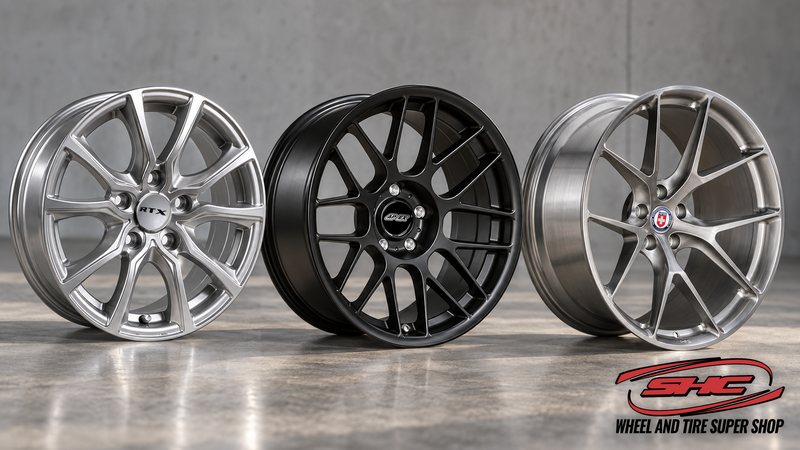
Two wheels, same diameter, same width, same bolt pattern. One is $280. One is $1,400. Sitting on the counter they look like similar objects, and the honest question customers ask is whether the expensive one is four times the wheel or four times the marketing. The answer is in how the aluminum was shaped, and it is worth understanding before you spend either amount.
Cast: molten aluminum poured into a mould
The overwhelming majority of wheels on the road are cast. Molten aluminum goes into a mould — gravity-fed on the cheaper end, low-pressure on the better end — and cools into shape. It is simple, repeatable and inexpensive, which is why cast wheels cover nearly every size, finish and bolt pattern you can think of.
The trade-off is in the metal itself. Cooling from liquid leaves a relatively coarse grain structure with some porosity, so a cast wheel has to be made thicker to hit its strength target. That means weight. It also means that when a cast wheel meets a bad pothole hard enough, it tends to crack rather than bend.
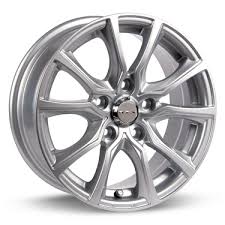
A cast wheel like the RTX Contour covers the everyday brief: right size, right finish, sensible money.
None of that makes cast wheels a bad buy. For a commuter, a winter set, or any car where the wheels need to look right and survive Victoria roads without drama, cast is the correct answer and the rest of this article is optional reading. RTX, Fast, Touren and Vision all live here and all do the job.
Flow-formed: cast, then stretched
Flow-forming (you will also see it called rotary forging or flow-forging) starts with a cast centre, then spins the barrel while steel rollers press and stretch the aluminum outward under heat and pressure. That working of the metal compresses the grain structure in the barrel specifically — the part of a wheel that carries the most load and is most vulnerable in an impact.
The result is a barrel that can be made thinner without losing strength. A flow-formed wheel typically comes in noticeably lighter than a comparable cast wheel while costing a fraction of what forging costs. It is the best value-per-gram in the whole category, and it is where most enthusiasts should be shopping.
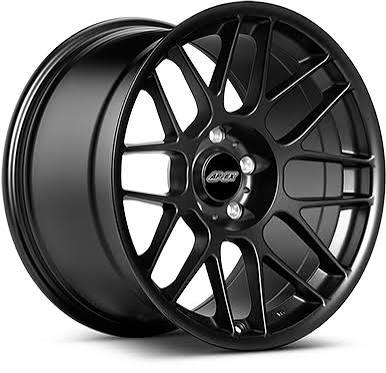
The APEX ARC-8 is the flow-formed benchmark on BMW and Honda chassis - track-proven, and not a wheel you will find on our website.
Konig, Braelin, Motegi and Rotiform all have flow-formed lines. So does APEX, whose ARC-8 and EC-7 have become the default answer for track-day BMWs and Civic Type Rs, and HRE, whose FlowForm FF21 and FF28 bring the HRE design language down to a reachable price.
Forged: pressed from a solid billet
Forging skips molten metal entirely. A solid billet of aluminum — typically 6061-T6 — is squeezed under enormous pressure into a rough wheel shape, then machined down to the final design. The grain structure ends up dense and continuous, following the contours of the part rather than sitting randomly as it does in a casting.
That gets you the best strength-to-weight ratio available, meaningfully lighter wheels at the same strength, and a failure mode that bends rather than shatters. It also gets you a much bigger invoice, because forging presses are expensive and most of that billet ends up as machining swarf. The upside beyond weight is customisation: because each wheel is machined from raw stock, forged programs can build to your exact width, offset and concavity instead of an off-the-shelf spec.
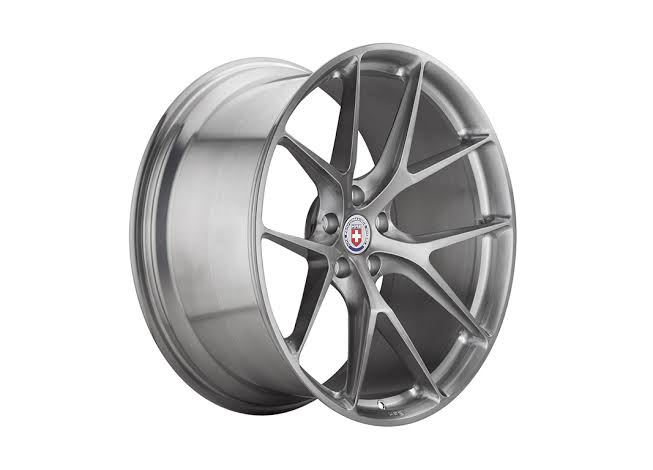
HRE P101 - a forged monoblok, built to a specified offset and width rather than picked from a shelf.
HRE is the reference point here, along with APEX’s forged ARC-8R and EC-7R, Asanti Forged, Fuel Fusion Forged and the forged side of Rotiform.
So what should you actually buy
Daily driver, or a winter set that will live in road salt and spray: buy cast, spend the savings on better tires. Tires change how a car drives far more than wheel weight does.
A car you enjoy driving, that sees a back road or the occasional track day: flow-formed. This is the sweet spot, and the weight you save is unsprung and rotational, which is the weight that actually matters for ride and steering response.
A build where the spec has to be exact, or a car where the wheels are the point: forged. Also the honest answer if you have been through two cracked cast wheels and are tired of it.
One thing worth saying plainly: construction method is not the only thing that matters. A well-engineered cast wheel from a serious manufacturer will outlast a cheap flow-formed one from a brand nobody has heard of. Load rating for your vehicle matters more than any of it — particularly on trucks and heavier EVs, where an underrated wheel is genuinely dangerous regardless of how it was made.
What we can actually get you
Worth knowing before you shop: our website shows a fraction of what we can order. The site lists over forty wheel brands because those brands supply a live data feed. Plenty of the names above — HRE and APEX among them — do not, and we are an authorized dealer for all of them. So if you have found a wheel you want and cannot find it on our site, that means nothing about whether we can get it. Send us the model and we will price it.
About SHC Auto
Sorting out which construction and which brand actually suits a car is a daily conversation at our counter. SHC Auto is a wheel, tire and appearance shop at 474 Bay Street in Victoria, serving Greater Victoria and Vancouver Island. The website lists over forty aftermarket wheel brands, and through our distributors we can order a great many more than that, including brands that never appear online. We order every major tire brand and handle tint, paint protection film, wraps, ceramic coating, detailing and vehicle graphics under one roof. Tread-depth and sidewall checks are always free, no appointment needed.
SHC Autographx and Tires — 474 Bay Street, Victoria BC — 250-360-2209 — Monday to Friday, 9:00 to 5:30
See Wheels on Your Vehicle in our visualizer, or Call the Shop and tell us what you are after — including anything you could not find online.