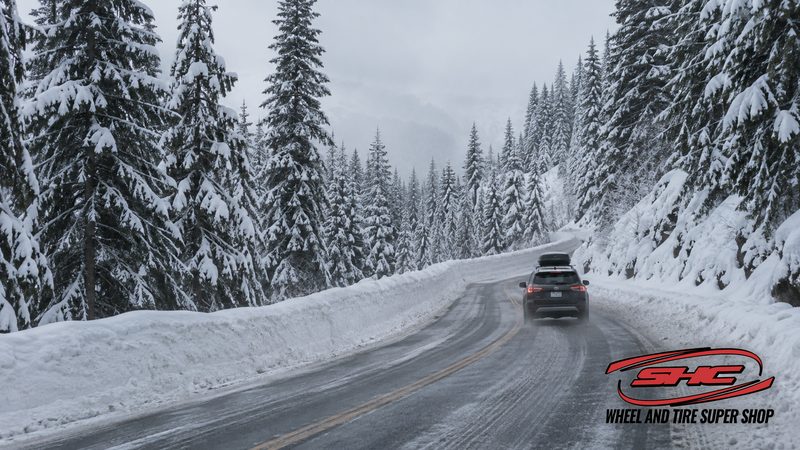
Every winter, a wave of Victoria drivers makes the same discovery at the same place: the bottom of the Strathcona Parkway, where the mountain checks your tires even when nobody else has all season. Mount Washington is a three-hour drive from Victoria — and the last thirty minutes play by completely different rules than the first two and a half hours.
Here’s how to set the car up so the mountain is the fun part.
The rules change twice on the way up
Leg one: Victoria to the Comox Valley. The Island Highway north of the Malahat is a designated winter tire route from October 1 — your tires need at least an M+S or mountain-snowflake marking and 3.5mm of tread. Current routes are on the Province of BC’s winter routes page.
Leg two: the Strathcona Parkway. The resort road climbs from near sea level to over 1,000 metres, and conditions flip from rain to snow partway up on an ordinary ski morning. The resort’s own guidance is blunt: good winter tires on all vehicles, and carry chains, ready to use when the chain-up light is on — details on the Getting Here page. Rental chains and roadside sympathy both run out on powder mornings.
Why M+S all-seasons aren’t the answer here
The all-seasons on most Victoria cars carry the M+S stamp, which technically clears the highway minimum. The Parkway is where “technically” goes to die. It’s a sustained mountain grade with real snow, and an all-season compound that’s already stiff at 3°C simply doesn’t grip at minus five on packed snow. If Mount Washington is in your winter plans more than once, the choices are two:
Dedicated winter tires — the right answer for regular skiers. Nothing else brakes or climbs like a true winter compound on snow and ice, and the mountain-snowflake symbol clears every checkpoint from your driveway to the alpine lot. Nokian built its reputation on exactly these tires.
All-weather tires — the honest minimum for the once-or-twice-a-year trip. The 3PMSF marking is earned in snow testing, and a good all-weather will get a careful driver up on a groomed-road day. It will not match a winter tire the day it dumps — know which trip you’re taking.
The pre-trip check, in five minutes
Beyond the rubber: measure your tread (3.5mm is the legal floor — for snow you want well more, and we’ll measure it free, walk-in), check pressures cold because the alpine cold will drop them further, make sure the washer fluid is winter-rated and full — the slush spray on Highway 19 is relentless — and confirm your chains actually fit the tires on the car now, not the ones it had two winters ago. Practice one chain install in the driveway; the chain-up area in a snowstorm is a bad classroom.
AWD gets you up. It does not get you down.
The Parkway’s ugliest moments are descents. All-wheel drive is a climbing tool — it does nothing for braking or cornering, which belong entirely to your tires. A RAV4 on all-seasons and a RAV4 on winters are different vehicles on the way down, and only one of them stops behind the ski bus instead of beside it.
Book before the season does
Every year the first big snowfall on the mountain sells out winter tire stock across the Island within days. If Mount Washington is on the calendar, get the tires sorted in October — you’ll have full size selection, and the first powder morning is spent skiing rather than queueing.
Heading up this season?
Call the Shop — we’ll set your vehicle up for the mountain, chains included in the conversation.
Start Your Quote Online — winter and all-weather pricing for your vehicle.