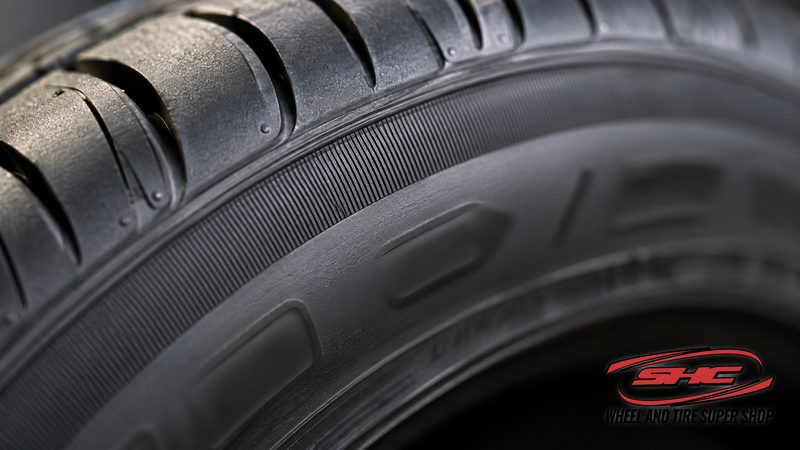
There’s more information moulded into the side of your tire than on most product labels you’ll ever read. Almost nobody knows how to read it — which is a problem, because it’s the difference between buying the right tire and buying one that fits but is wrong.
Here’s the whole sidewall, decoded.
The main size code
Take a common one: 225/45R17 94V
225 — Section width in millimetres. The tire is 225mm across at its widest point, measured sidewall to sidewall on a properly sized rim.
45 — Aspect ratio, as a percentage. The sidewall height is 45% of the section width, so about 101mm here. Lower number = shorter sidewall = sportier look and sharper steering, but a harsher ride and far more vulnerability to pothole damage. (Relevant on Island roads in February.)
R — Construction type. R is radial, which is essentially everything on the road today. You’ll see D for bias-ply on some trailers and B for belted bias, rarely.
17 — Rim diameter in inches. Yes, the code mixes metric and imperial in the same string. Nobody’s proud of this.
94 — Load index. See below.
V — Speed rating. See below.
Light truck and flotation sizes
Trucks and off-road applications often use a different format: LT285/70R17 (the LT prefix means Light Truck — heavier construction, higher load capacity) or a flotation size like 35x12.50R17, which reads as overall diameter × section width × rim diameter, all in inches.
If you’re going up in size, the fitment maths gets involved fast — that’s a conversation worth having with us before you buy.
Load index
The load index is a coded number, not a weight. 94 doesn’t mean 94 of anything — it maps to 670 kg per tire on a standard chart.
A few common values:
| Index | Capacity per tire |
|---|---|
| 87 | 545 kg |
| 91 | 615 kg |
| 94 | 670 kg |
| 97 | 730 kg |
| 100 | 800 kg |
| 105 | 925 kg |
| 110 | 1,060 kg |
| 116 | 1,250 kg |
Never fit a tire with a lower load index than your vehicle’s placard specifies. That placard lives on the driver’s door jamb. Going under is a safety issue and, in a collision, a liability one — the tire is being asked to carry more than it’s rated for, and heat builds accordingly.
Going higher is generally fine, though a much higher load index usually comes with stiffer sidewalls and a firmer ride.
Speed rating
A letter indicating the maximum sustained speed the tire is certified for:
| Rating | Max speed |
|---|---|
| Q | 160 km/h |
| S | 180 km/h |
| T | 190 km/h |
| H | 210 km/h |
| V | 240 km/h |
| W | 270 km/h |
| Y | 300 km/h |
Before you dismiss this as irrelevant on an island with a 90 km/h speed limit: speed rating isn’t really about speed. It’s a proxy for construction quality. Higher-rated tires generally have stiffer sidewalls, more responsive steering, and better heat dissipation. They also tend to wear faster and ride firmer.
Match or exceed your vehicle’s original rating. Dropping below it can affect handling in ways the vehicle wasn’t engineered for — and can matter for insurance.
One exception worth knowing: winter tires are commonly rated one step below the original equipment, which is accepted practice and not a problem given the conditions they’re used in.
UTQG: treadwear, traction, temperature
Look for three values together, like 500 A A.
Treadwear (500) — A comparative number where 100 is the baseline. A 500-rated tire should theoretically last five times longer than a 100-rated one. The important caveat: manufacturers grade their own tires, so the number is only reliably comparable within a single brand. A Michelin 500 and a budget-brand 500 are not the same claim.
Traction (AA, A, B, C) — Straight-line wet braking on asphalt and concrete. AA is best. This is a real, standardized test and worth paying attention to in a climate like ours.
Temperature (A, B, C) — Heat resistance at speed. A is best. C is the legal minimum.
Note that UTQG is not applied to winter tires, so a blank here on a snowflake-marked tire is normal, not a red flag.
The DOT code — how old is this tire?
Find DOT followed by a string of characters, ending in four digits. Those last four are what matter.
“3524” means the tire was manufactured in week 35 of 2024.
This is the single most useful thing on the sidewall and the one people check least. Rubber ages whether or not it’s being driven on — the compound oxidizes, plasticizers migrate out, and the tire gets progressively harder and less grippy. A tire with full tread that’s been sitting for eight years is not a good tire.
General guidance: inspect anything over six years old, and strongly consider replacing at ten, regardless of remaining tread. Check the spare while you’re at it — that’s where ancient tires hide.
If you’re buying tires and the date code is more than a year or two old, ask about it. We’ll always tell you what we’re fitting.
The winter markings
M+S / M/S / M&S — Mud and Snow. A tread-pattern designation, not a performance test. It’s the minimum legal standard for BC’s designated winter routes.
3PMSF (three-peak mountain snowflake) — Earned by passing a standardized snow traction test. This is what all-weather and dedicated winter tires carry, and what you actually want if you’re driving the Malahat in January. Our winter tire law article covers the difference in detail.
Everything else you’ll see
Max pressure — The tire’s maximum cold inflation, not your recommended pressure. Use the number on your door jamb placard instead. This one causes a lot of overinflated tires.
TWI — Treadwear indicator arrows on the shoulder, pointing to the moulded wear bars in the grooves. When the tread is flush with the bars, you’re at 1.6mm and legally done.
Rotation arrow — Directional tires must be fitted to rotate one way only. This restricts how they can be rotated between corners.
Inside / Outside — Asymmetric tires have a designated outboard face. Mounting one backwards ruins its wet performance and is more common than it should be.
Ply composition — The materials in the tread and sidewall plies, usually in small print. Rarely relevant to a buying decision.
The two-minute version
If you only remember three things from this:
- Match the size, load index, and speed rating on your door jamb placard.
- Check the DOT date code before you buy and on any tire that’s been sitting.
- Use the placard pressure, not the max pressure on the sidewall.
Industry bodies like the Tire and Rubber Association of Canada publish good consumer references if you want to go deeper, and most manufacturers — Michelin and Bridgestone among them — maintain their own sidewall guides.
Or just bring the car in. We read these all day, and we’ll tell you exactly what you’re on and what your options are.
Want us to check what you’re running?
Call the Shop — free sidewall read and tread depth check.
Start Your Quote Online — enter your size and see what fits.